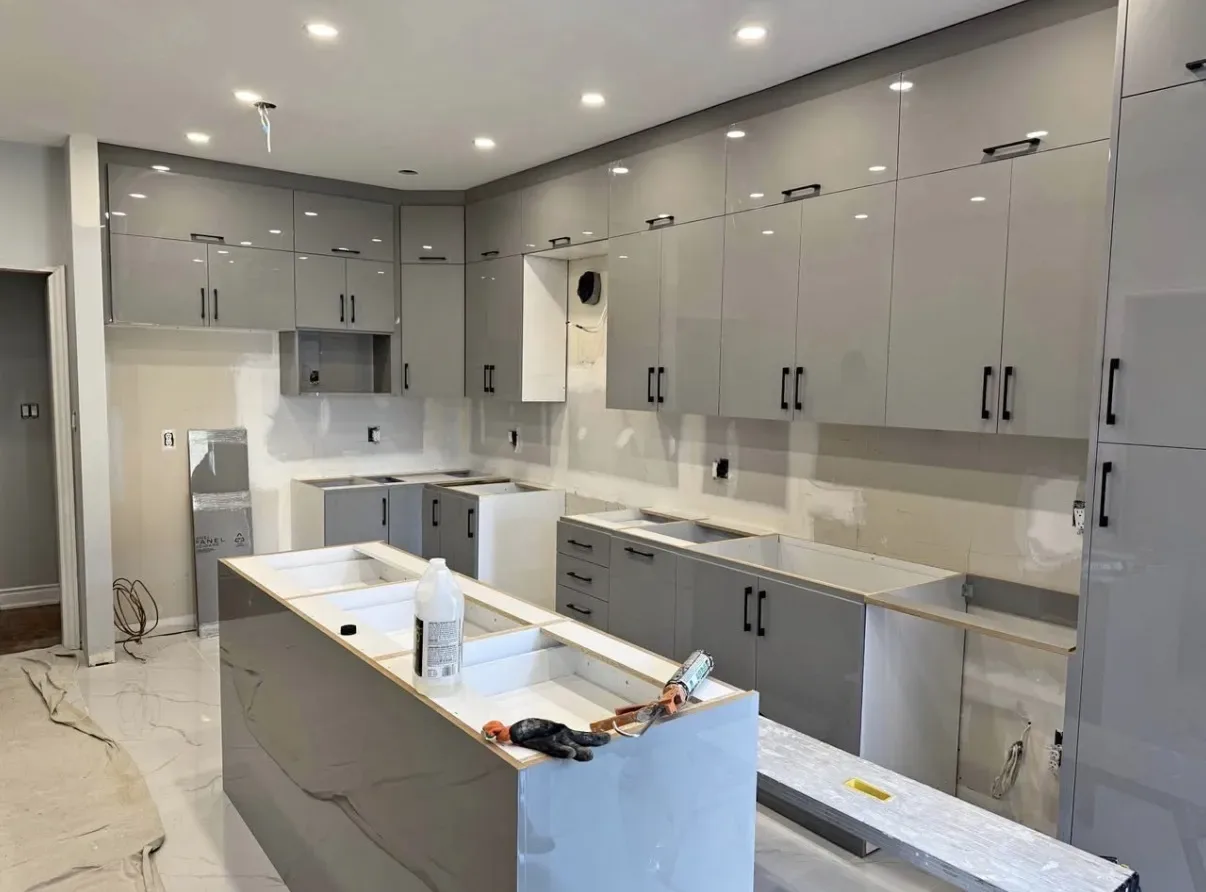
Interior finishing
"D&D boarded and finished our whole basement and the walls are dead flat. They asked for a Level 5 finish on the feature wall and you genuinely cannot see a single seam. Cleanest drywall crew we've ever had in the house."
What is drywall and plastering in New Hamburg?
Plan drywall, plaster or textured-ceiling work in New Hamburg with the original woodwork, floor edges and adjoining finishes identified before the repair method is chosen. D&D Interior Services. Call (519) 501-5003.

Plan drywall, plaster or textured-ceiling work in New Hamburg with the original woodwork, floor edges and adjoining finishes identified before the repair method is chosen.
Removing texture is only one possible part of a ceiling refresh. The scope also needs to account for the existing material, the condition below it, the wall junction and the finish expected before paint returns the room to use.
A stain, crack or damaged patch can have an underlying cause. Replacing the visible area will not resolve an active leak or continuing movement that needs separate attention.
Strong side lighting and smooth decorative finishes can make joints and surface irregularities more noticeable. The expected finish should be considered before the boarding and joint work are complete.
Corners, openings and existing textures affect how a repaired area blends in. Painting may extend beyond the patch to create a consistent appearance, and should be clear in the quote.
Board installation, joint finishing, skim coating and localized repairs are different drywall tasks. The intended paint finish and room lighting help define the finish level to discuss.
For a New Hamburg home with original floors or woodwork, show those features alongside the ceiling or wall to be changed. For a property outside the town in Wilmot, provide the full address and access route. Neither the community name nor a river-area location establishes the cause of a stain or the contents of a coating.
Use the full drywall and plastering guide alongside the New Hamburg property guide. For adjoining work, discuss painting after drywall repair before agreeing the finishing boundary.
In our clientsβ words
Interior finishing
"D&D boarded and finished our whole basement and the walls are dead flat. They asked for a Level 5 finish on the feature wall and you genuinely cannot see a single seam. Cleanest drywall crew we've ever had in the house."
Interior finishing
"We had ugly popcorn ceilings throughout our 1980s home. D&D scraped them all, skim coated everything smooth, and the dust control was unreal β barely any mess. The ceilings look brand new and modern now."
Interior finishing
"A pipe leak left a big water stain and sagging drywall on our ceiling. D&D cut it out, replaced the board, and blended the repair so well you'd never know anything happened. Fast, tidy, and fairly priced."
Resolve suspect material, leakage and unfinished service openings before the finishing scope is confirmed.
Allow for the specified preparation and drying stages, then review the surface with its adjoining walls and trim. Confirm primer, paint, cleanup and care information at completion.
Include a whole-room view, ceiling edges, light fittings and details to retain. Note recurring stains and work already done to investigate them.
Identify furniture, valuable belongings and the route for materials and debris. Include stairs and spaces that cannot be cleared together.
Separate walls, ceilings, repairs and new installation.
Record visible damage and unresolved underlying concerns.
Clarify preparation and the surface expected before decorating.
Confirm access, nearby belongings and cleanup responsibilities.
For a New Hamburg ceiling, compare assessment, protection, removal if appropriate, new board or skim work, edge details and decoration. The ceiling area alone does not capture retained woodwork or occupied-room access. Obtain a quotation tied to the confirmed method instead of relying on a general per-square-foot range.
A local repair can be considered where the remaining material is suitable and the cause is resolved. Multiple loose, damp or damaged areas need broader assessment. Compare the repair boundary, retained details and final decoration before deciding whether skimming or replacement is justified.
The material assessment and chosen method come before a reliable sequence. Joint work, skim coats, primer and paint can have separate drying requirements and return visits. Agree when the room must be clear and when it can be used again; texture removal is not a guaranteed one-day task.
Level 5 adds an overall skim treatment beyond Level 4 joint finishing. Existing textured or plaster ceilings need their own substrate and treatment description. Agree the final light and paint requirements. Read USGβs finish guidance.
Include the water-damage repair in the enquiry, but document the source and any investigation already completed. Damaged materials and unresolved moisture need attention before the ceiling is closed. Replacing board, insulation, related specialist work and repainting should each have a clear responsibility.
Texture work can be assessed, but suspected asbestos requires professional investigation before scraping or sanding. Age and appearance are not clearance to proceed. Health Canada explains asbestos precautions. Agree the finishing scope after the appropriate assessment.
The plan should cover protected floors and woodwork, containment, the access route, sanding methods and cleanup. Discuss rooms that must remain usable and any items that cannot be moved. Confirm these arrangements for the assessed materials rather than assuming ordinary dust controls cover every situation.
Any offered workmanship warranty should be written for the accepted work, with its duration, exclusions and reporting procedure. Keep product documents and completion notes together. This page does not promise an invisible repair, ongoing protection from leaks or a particular warranty period.
First establish whether the source of the stain has been addressed and what material needs assessment. Covering the mark is a finishing task; it does not establish that the ceiling or the cause of the water entry is resolved.
The blend depends on the existing texture, paint and lighting. Discuss the decorating area as well as the repair dimensions; repainting only the patch may leave a visible difference beside aged coatings.
Ask for a description of the expected surface, joint work and any priming included. The term should be connected to the planned decorative finish and room lighting rather than treated as a universal finish guarantee.
Describe the texture and known age or history for assessment before disturbance. The proposed method and any material investigation need to be established first; a photograph cannot confirm what an existing coating contains.
Joint treatment and related products have drying and recoat requirements. The room condition and extent of work affect the sequence, so confirm the actual stages rather than assuming every repair can be decorated immediately.
Identify planned openings and service changes before the ceiling or wall is finished. Coordinating those tasks can prevent a newly repaired surface from needing to be opened again for an unresolved fixture location.
Explain whether the room is occupied, which surfaces are affected and whether the damage has returned. Include planned lighting or plumbing work so the repair can be assessed alongside any openings that still need to be made.
Coordinate the two scopes. Ceiling treatment may affect the edge where crown will sit, while later fitting can require filling or paint touchups. Agree which work establishes the finished junction and who decorates it so neither quotation leaves the edge unfinished.


For a service enquiry, use the contact link above. The date and time request only shares preferences; arrangements are confirmed separately.
Start with your property
A request is not a confirmed appointment or service agreement.
Share a preferred date and time. We will confirm arrangements with you; sending a request does not book an appointment.
Choose a preferred date and time. The team will confirm availability and the proposed arrangements.
Prefer to send the details first? Request a quote or call (519) 501-5003.