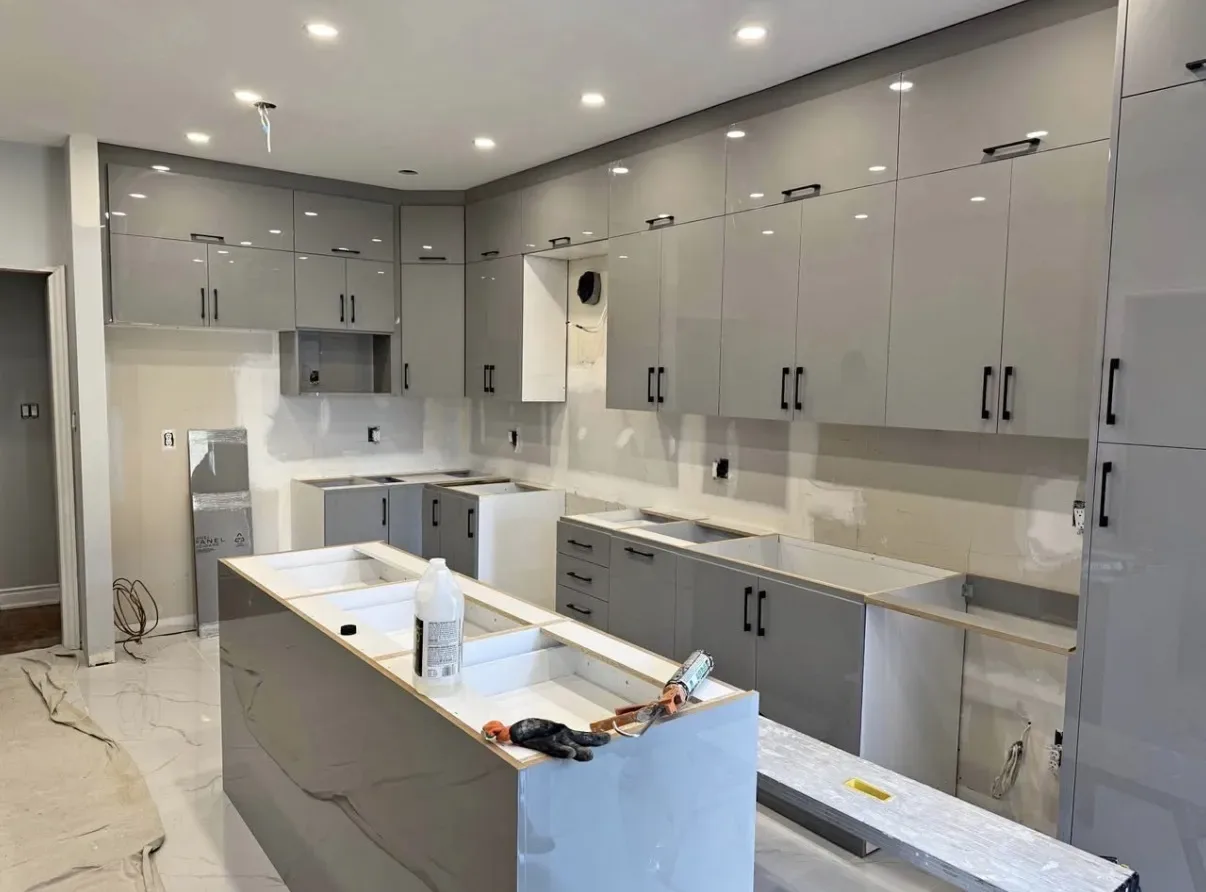
Interior finishing
"D&D boarded and finished our whole basement and the walls are dead flat. They asked for a Level 5 finish on the feature wall and you genuinely cannot see a single seam. Cleanest drywall crew we've ever had in the house."
What is drywall and plastering in Glen Christie?
Plan drywall work in Glen Christie with new boarding, existing-surface repairs and decoration listed separately, so each renovation phase has a clear starting and finishing point. D&D Interior Services. Call (519) 501-5003.

Plan drywall work in Glen Christie with new boarding, existing-surface repairs and decoration listed separately, so each renovation phase has a clear starting and finishing point.
A project can include both open framing and occupied rooms with small defects. Those areas need different preparation and access arrangements. Identify the surfaces in each phase before treating the work as one continuous boarding job.
A stain, crack or damaged patch can have an underlying cause. Replacing the visible area will not resolve an active leak or continuing movement that needs separate attention.
Strong side lighting and smooth decorative finishes can make joints and surface irregularities more noticeable. The expected finish should be considered before the boarding and joint work are complete.
Corners, openings and existing textures affect how a repaired area blends in. Painting may extend beyond the patch to create a consistent appearance, and should be clear in the quote.
Board installation, joint finishing, skim coating and localized repairs are different drywall tasks. The intended paint finish and room lighting help define the finish level to discuss.
For a Glen Christie enquiry, give the full address, room locations and the route for materials. If the work extends through several rooms, show which can be cleared together and which must remain usable. Include any available renovation drawings alongside current photographs so new work and retained surfaces are distinguishable.
Use the full drywall and plastering guide alongside Service areas and enquiries. Include painting after drywall repair when coordinating adjoining work.
In our clientsβ words
Interior finishing
"D&D boarded and finished our whole basement and the walls are dead flat. They asked for a Level 5 finish on the feature wall and you genuinely cannot see a single seam. Cleanest drywall crew we've ever had in the house."
Interior finishing
"We had ugly popcorn ceilings throughout our 1980s home. D&D scraped them all, skim coated everything smooth, and the dust control was unreal β barely any mess. The ceilings look brand new and modern now."
Interior finishing
"A pipe leak left a big water stain and sagging drywall on our ceiling. D&D cut it out, replaced the board, and blended the repair so well you'd never know anything happened. Fast, tidy, and fairly priced."
Review unresolved causes and work by others before setting the sequence. Record assumptions, access arrangements and how additional work will be approved if conditions differ from the brief.
Allow for drying between joint treatments. Review the agreed surface under relevant room light and confirm primer and decoration responsibilities before another phase restricts access.
Label each room as new board, repair or retained. Add wider photographs and close-ups of defects, with known material and leak history. Identify decisions still outstanding before the next surface can be closed.
Show storage, stairs and narrow entrances. Define furniture movement, floor protection and cleanup for each phase, including occupied rooms along the delivery route.
Separate walls, ceilings, repairs and new installation.
Record visible damage and unresolved underlying concerns.
Clarify preparation and the surface expected before decorating.
Confirm access, nearby belongings and cleanup responsibilities.
A Glen Christie quote should separate open-area boarding from isolated repairs, ceiling smoothing and phased setup. Include finish level, protection, disposal and primer in the comparison. A general square-foot rate does not describe the extra interfaces between new and retained work.
A patch may suit localized damage beside sound material. Wider skim coating or replacement can be assessed when condition or planned access warrants it. Address recurring causes first; the choice is not decided by a fixed percentage of damaged wall.
Plan for preparation, boarding where needed, successive finishing treatments and drying. Several phases can require separate return visits. Confirm when each room reaches the agreed decoration stage instead of assuming one visit or a universal whole-house duration.
Level 4 covers joint and fastener finishing; Level 5 adds treatment across the whole surface for greater uniformity. Choose with lighting and decoration in mind. USG explains finish-level considerations; no level guarantees perfection under every light.
Repair can be assessed once the source of water and affected materials have been addressed. Supply any investigation or leak-repair records. New board and paint cannot establish that concealed damage or mould has been resolved.
A smooth-ceiling scope needs assessment of the existing texture before disturbance. Health Canada advises professional assessment of suspect asbestos materials. Assign any testing or specialist removal separately before confirming the finishing method.
Agree containment and dust-reduction methods for the work zone and the route between phases. Identify occupied rooms and belongings needing protection. Cleanup and furniture responsibilities should be explicit; dust control is not a dust-free guarantee.
Ask for any workmanship coverage in the written proposal, including duration, exclusions and reporting arrangements. Clarify how recurring movement, moisture or damage from later renovation phases is treated.
First establish whether the source of the stain has been addressed and what material needs assessment. Covering the mark is a finishing task; it does not establish that the ceiling or the cause of the water entry is resolved.
The blend depends on the existing texture, paint and lighting. Discuss the decorating area as well as the repair dimensions; repainting only the patch may leave a visible difference beside aged coatings.
Ask for a description of the expected surface, joint work and any priming included. The term should be connected to the planned decorative finish and room lighting rather than treated as a universal finish guarantee.
Describe the texture and known age or history for assessment before disturbance. The proposed method and any material investigation need to be established first; a photograph cannot confirm what an existing coating contains.
Joint treatment and related products have drying and recoat requirements. The room condition and extent of work affect the sequence, so confirm the actual stages rather than assuming every repair can be decorated immediately.
Identify planned openings and service changes before the ceiling or wall is finished. Coordinating those tasks can prevent a newly repaired surface from needing to be opened again for an unresolved fixture location.
Explain whether the room is occupied, which surfaces are affected and whether the damage has returned. Include planned lighting or plumbing work so the repair can be assessed alongside any openings that still need to be made.
Discuss the access route and remaining dust-producing work first. A separate room handoff may be possible, but the proposal should explain protection, ventilation coordination and responsibility if later work disturbs the completed finish.


For a service enquiry, use the contact link above. The date and time request only shares preferences; arrangements are confirmed separately.
Start with your property
A request is not a confirmed appointment or service agreement.
Share a preferred date and time. We will confirm arrangements with you; sending a request does not book an appointment.
Choose a preferred date and time. The team will confirm availability and the proposed arrangements.
Prefer to send the details first? Request a quote or call (519) 501-5003.