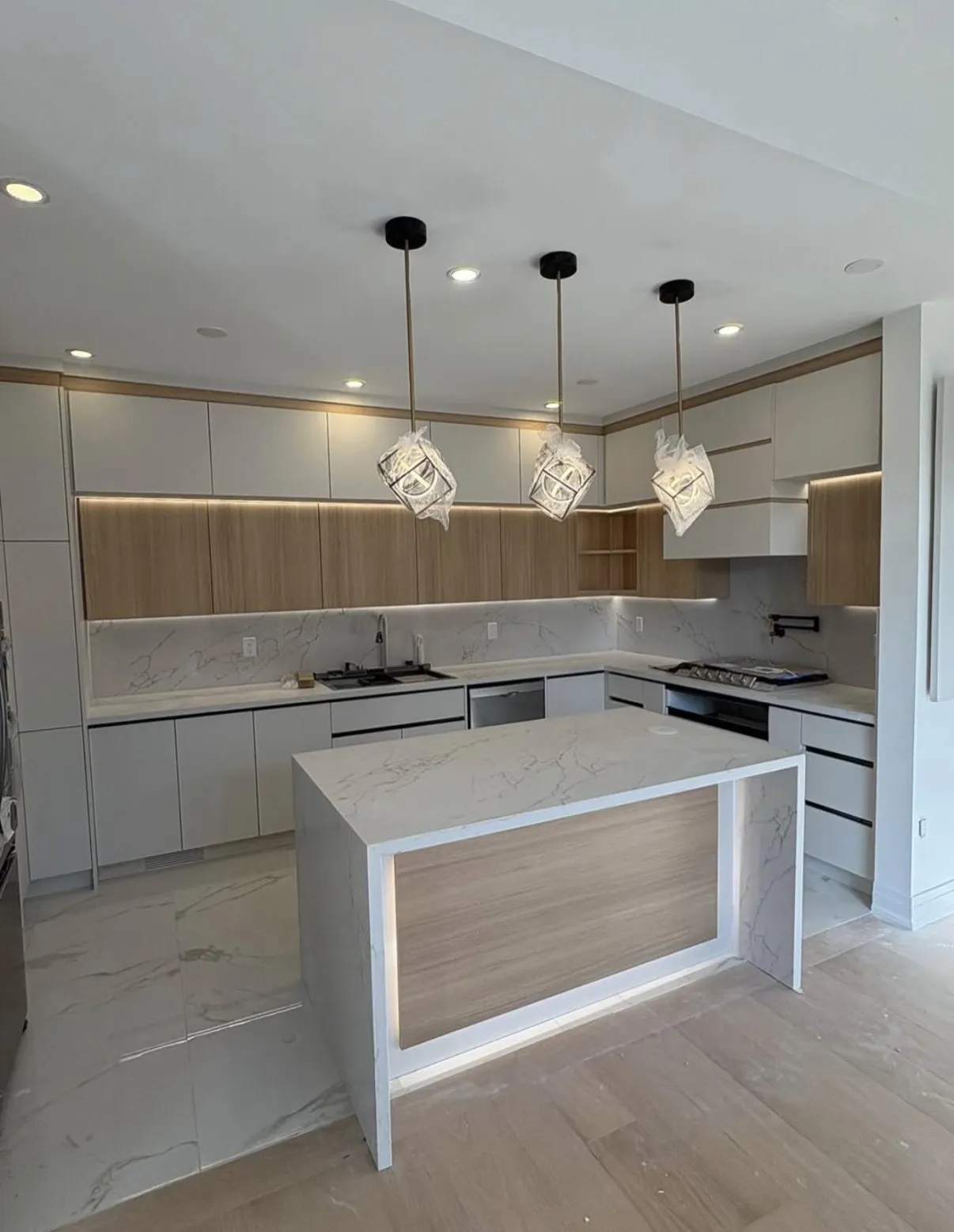
Understand the wall and the rooms around it
Start with the intended result: a wider route, a larger sightline, a different kitchen arrangement or a fully connected living space. Consider what the wall currently provides, including storage, furniture placement, sound separation and locations for switches or appliances.
Have the wall’s role assessed by an appropriately qualified professional. Joist direction, alignment with a basement beam and position in the house are observations to investigate, not permission to remove it. Existing alterations and concealed conditions may affect the answer.
Discuss the building type and proposal with the municipality. Kitchener’s guidance distinguishes removal of a load-bearing wall from certain non-load-bearing removals in specified dwelling types. Do not turn that local example into a blanket exemption for every open-concept project.
Resolve structure, services and approvals together
If structural work is required, the design needs to address the complete load path and connections, including support below the new opening. The choice of beam, posts and any foundation work comes from that design. A photograph of a similar room or a span rule from the internet cannot size the assembly.
Identify the services in or beside the proposed opening and who will assess any changes. Electrical wiring, plumbing and heating or ventilation routes each need an appropriate plan. A wall should not be opened on the assumption that there is nothing consequential inside it.
Ask who will provide the required design information, obtain the approvals and coordinate inspection hold points. Temporary support and the construction sequence belong in the qualified contractor’s method and structural review; this guide is not a procedure for removing support.
Include the finished room in the scope
Map the surfaces affected by the removed wall: ceiling and wall patches, the floor gap, trim, lighting and any newly visible difference between adjoining finishes. Matching an existing surface may be difficult if the original material is unavailable or has changed with use.
Decide whether an exposed or enclosed structural element is acceptable before the design is priced. A flush appearance can affect the structural arrangement and service routes; it is not merely a decoration choice. Ask for options that are feasible for the actual building.
Obtain a scope that separates investigation, design, approvals, structural work, service alterations and finishing. Confirm the work each provider will perform and how the household will use the property during it. Discuss D&D’s interior finishing contribution specifically rather than assuming an unverified structural-design or permit-management service.
Key takeaways
- Determine the wall’s actual role before planning removal.
- Design the whole load path and service changes.
- Include floor, ceiling and adjoining finish repairs in the quotation.
Sources and further reading

Include a preferred date and time
Plan your renovation
Select the room or finish you want to change and describe how you use the space.
Prefer to send the details first? Request a quote or call (519) 501-5003.